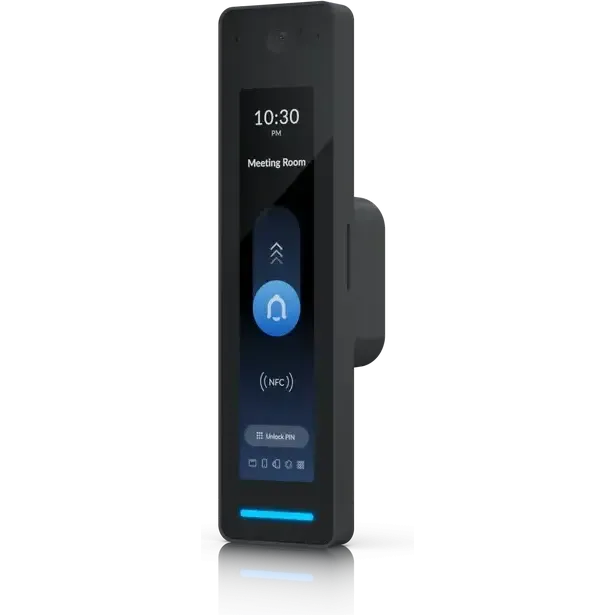
Badge, phone or code at the door
Entry controlled per person and per time of day, on hardware you own, with no per-door monthly licence.
A survey per door, before anything else
What is on the door now
The lock, the frame, whether it is on a closer, whether it is fire-rated, and what has to keep working if the power goes.
Where the reader sits
Which way the door is handed decides the side. The cable route decides whether the controller sits above the door or in a cupboard down the corridor.
Wired to the controller
Reader, lock and door contact wired back, and every door tested locking and unlocking on its schedule.
People and hours
Credentials issued, schedules set, and the exceptions written down — holiday hours, the contractor window, the one door that stays on a key.
Credentials are issued and revoked per person
Access is held as a list of people and the doors each one may open. Removing somebody from it stops them at every door at once, with nothing changed on the doors themselves. A mechanical key has no equivalent: recovering it means recutting the cylinder and reissuing every key that fits.
Schedules are set per credential and per door — the cleaner on Tuesday mornings, the delivery window on weekdays, the front door unlocking at opening time and locking behind the last person out.
The rules and the credential list are held on a controller in the building, so a door keeps its schedule when the internet drops.
Each bar is one credential and the hours it works at that door. The bottom row is a revoked credential, which stops at every door at the same moment.
Who opens which door, and when
Every rule below is set per person and per door, and applies the next time the credential is presented.
Revoked at every door at once
One change to a person’s record stops them everywhere on the system. No cylinder is recut and nothing on the doors changes.
Hours set per person and per door
Cleaners, deliveries and staff can each have their own window, and the window can differ from door to door.
Phone, card, fob or code
One person can hold more than one. A door can ask for a card plus a code at some hours and either one at others.
Scheduled unlock and lock
The front door unlocks at opening and relocks at a set time, or relocks once the last credential has been presented on the way out.
Every entry is logged
The door, the person and the time are recorded, whether the door opened or the credential was refused.
No per-door licence
The controller and the credential list sit in the building. There is no per-door or per-user charge to keep the doors working.
The reader, and the kit behind it
The reader is the part on the outside of the door. The controller, the power supply, the exit request and the door contact are behind it, and for a single door they come as one kit.
The everyday reader — badge, phone or a tap to enter
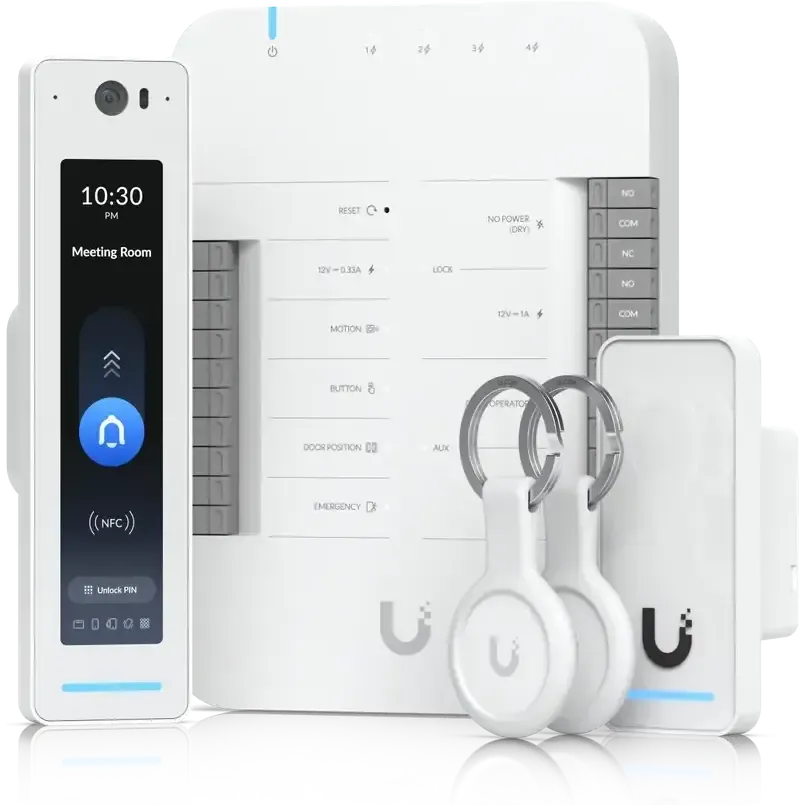
Everything one door needs, as a single kit
Questions we get asked
No. It runs on hardware you own, with no per-door or per-user subscription to keep the doors working.
Yes. Windows are set per credential and per door, so cleaners, deliveries and staff hours can all differ, and can differ from one door to the next.
Yes — phone, card, fob, code, or a combination, and different rules can apply at different times of day.
It is set per door. A fail-secure lock stays locked and a fail-safe lock releases, and which goes on which door is decided at survey alongside the fire requirements for that door.
Often. A reader goes on the existing frame and drives the existing strike or maglock, so the door furniture usually stays. The survey establishes which doors that suits.
Start with a list of the doors
How many, what is on them now, and who needs through them and when. The per-door survey follows from that list.