(844) 422-7000

Wi-Fi with a cable to every access point

Count and placement come from a signal survey of the building. Cat6 to each unit, power down the same cable, one console for the whole site.

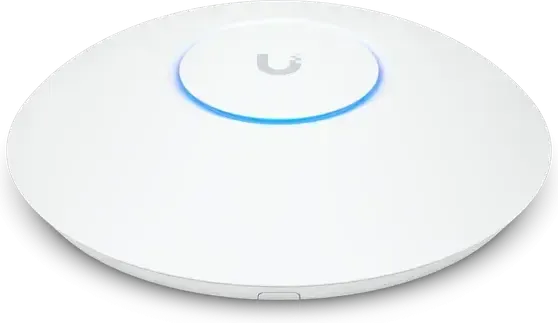
Ceiling-mounted, for open-plan offices and shop floors

Coverage is set by wall construction more than by floor area

An open drywall office covers a lot of ground per unit. Block walls, foil-backed insulation, plaster over metal lath and a stone chimney each take a bite out of it.

The count comes from walking the building with a meter and reading what the existing signal does at the far corners of each room.

Management runs on a console in the building. There is no per-unit licence and no monthly platform fee.

TWO BUILDINGS OF THE SAME FLOOR AREAOPEN PLAN, DRYWALLTWO ARE ENOUGH HEREBLOCK WALLS AND FOILSIX, FOR THE SAME FLOOR AREAEACH DOT IS ONE ACCESS POINT
THE SAME FLOOR AREAOPEN PLAN, DRYWALLTWO ARE ENOUGH HEREBLOCK WALLS AND FOILSIX, FOR THE SAME FLOOR AREAEACH DOT IS ONE ACCESS POINT

Two buildings of the same floor area, one open and one divided, take different numbers of units. Both plans below are the same square footage.

What you get

Capacity, roaming and the guest network

Coverage and capacity are two different numbers. A unit that reaches the far wall can still run out of airtime when the room fills, so the design counts devices as well as distance.

One console for the whole site

Every access point, its clients and its channels appear in one place. A password or network-name change applies to all of them at once.

Designed for the busy hour

Device count at the peak sets how many units a room takes. Thirty people is sixty or more associated devices once phones and laptops are both counted.

A separate guest network

Visitors reach the internet and nothing on the internal side. The splash page carries your own name and your own terms.

Handover between units

A device moving through the building is passed from one access point to the next without a full re-authentication at each one, so a call does not stall.

Nothing to renew

Management and every feature keep running with no licence to expire, because the console runs on hardware in the building.

A cable to each unit

Each access point takes its own Cat6 back to a switch that powers it. A repeater relays on the same radio it serves, which halves throughput, so one goes in only where a cable cannot reach.

The equipment

Ceiling, wall plate and outdoor

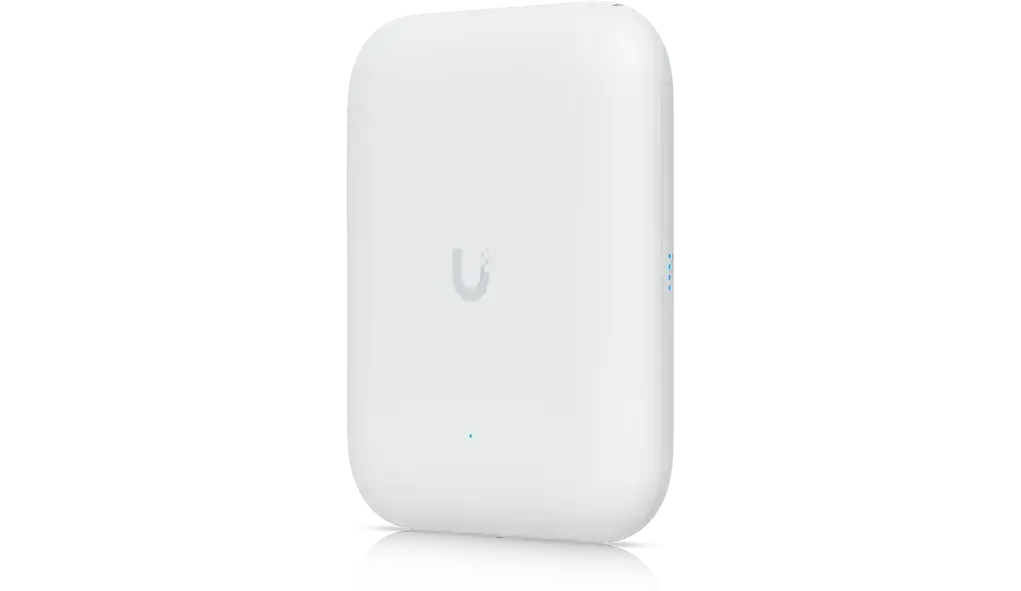
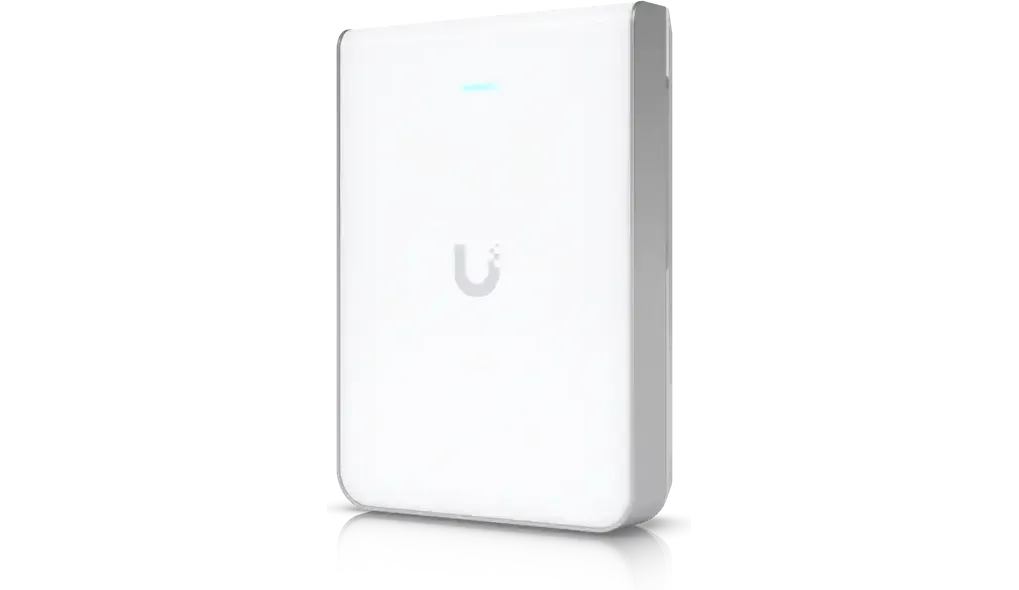
The mount decides the shape. A wall plate adds wired sockets behind the desk it replaces; the outdoor unit is sealed and takes a bracket or a mast.

Ceiling-mounted, for open-plan offices and shop floors
Ceiling-mounted, for open-plan offices and shop floors

Wall plate with a passthrough socket — hotel rooms, offices, flats

Wall plate with a passthrough socket — hotel rooms, offices, flats

All-weather, for a courtyard, a patio or a dock

All-weather, for a courtyard, a patio or a dock

How it works

How the work runs

01

Measured room by room

The existing network left running, signal read at the far corners, and the dead spots marked on a floor plan.

02

Positions marked

Mounting points set against the joists, the ductwork and the cable route back to the cabinet.

03

Cabled and powered

Cat6 back to a switch that powers each unit over the same cable.

04

Tuned, then handed over

Channels and transmit power set against the neighbouring networks on the same band, then the guest network tested from a visitor’s phone.

Questions we get asked

How many access points does a building this size need?

It depends on wall construction far more than floor area. Open drywall offices cover a lot of ground per unit; block walls, foil-backed insulation and plaster over metal lath do not. The count comes off the survey.

Do these need a subscription?

No. Management runs on a console you own. There is no per-unit licence and no monthly platform fee.

Can this replace an existing Meraki or Aruba system?

Yes. Those platforms licence the management per access point and this one does not. A replacement reuses the existing cabling wherever it is sound, and positions that still suit are swapped one for one.

Do we need Wi-Fi 7?

Only if the devices can use it. What it adds over the previous generation is mostly the 6 GHz band and wider channels, and neither makes an older laptop faster.

Can visitors be kept off the business network?

Yes. A guest network is standard, carries your own name and splash page, and cannot reach anything on the internal side.

Tell us about the building

Its size, what the walls are made of, and how many people are on at once. Those three set the count.

CloudCentric · Mount Pleasant, SC · serving Charleston and the Lowcountry(844) 422-7000