Lowcountry managed IT
Home network rack design and wiring
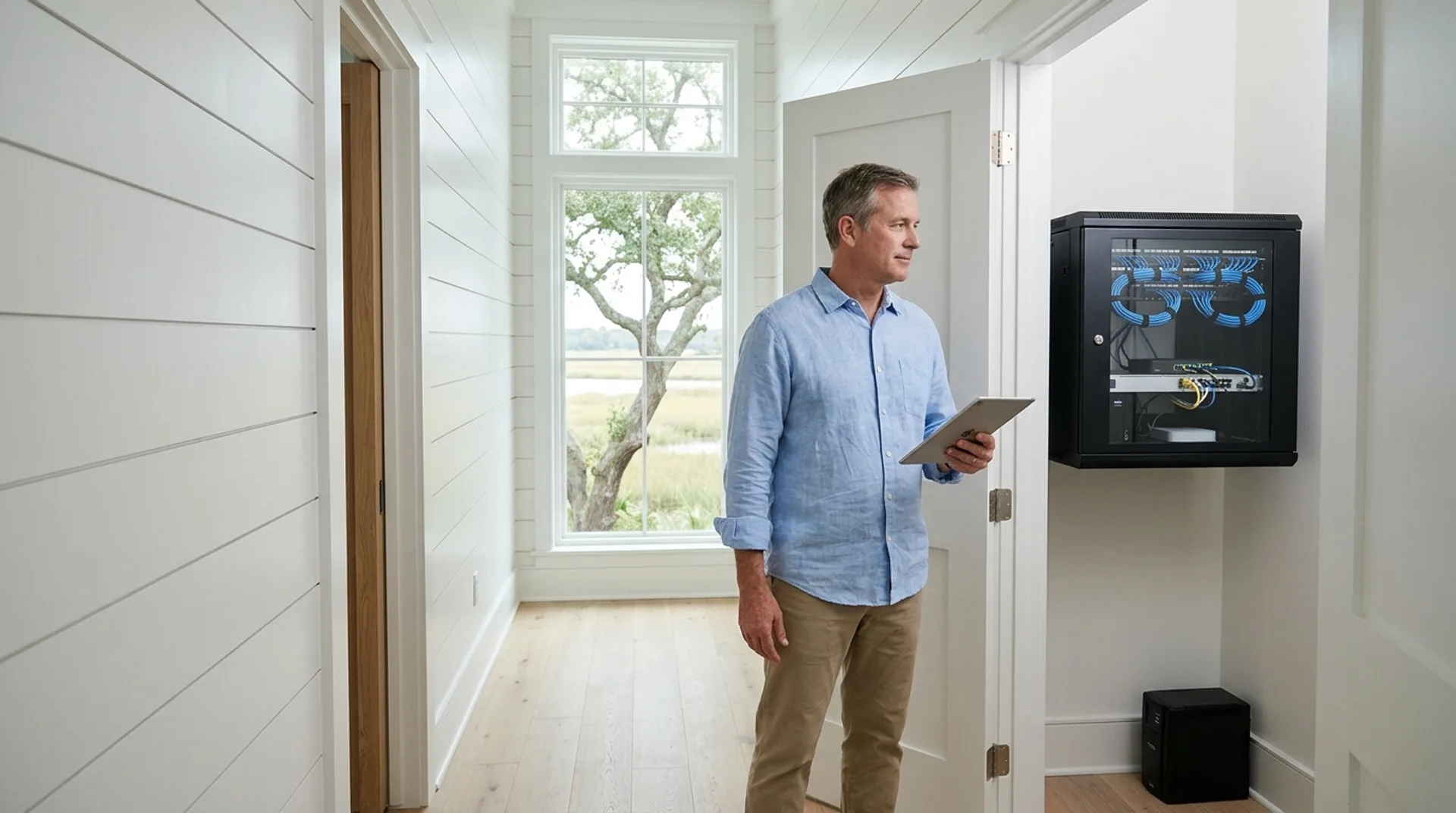
Cable runs to every room from a tidy, labeled rack above flood level while a battery keeps the network running through a short power cut.
Wiring routes for your kind of house
Cable paths depend on your walls and foundation. Empty conduit runs to outbuildings, and fiber spans longer outdoor distances.
- Attic route
- Under-floor route
- Open wall runs
- Conduit with pull string
- Walls that stay closed
- Wi-Fi access point
- Rack battery
- Second internet line
- Surge protection
- Attic and crawlspace runs
- Cable behind open walls
- One central rack
- Conduit for future runs
- Cable before spray foam
- Labels on every wire
- Battery backup power
- Fallback internet line
- Remote camera viewing
- House walked first
- Plaster and tabby care
- Wi-Fi access points
- Conduit in open ground
- Pull strings for cable
- Outdoor surge protection
House drawing and cable routes are an example.

Cable routes through your attic, your crawlspace and walls being opened anyway.

Rack and positions get placed at plan review. Cable goes in before insulation and drywall.
Rack battery and a second internet line or 5G backup keep cameras and doors visible on your phone while you are away.

Wi-Fi cameras and access points go where plaster, brick or tabby walls stay closed.
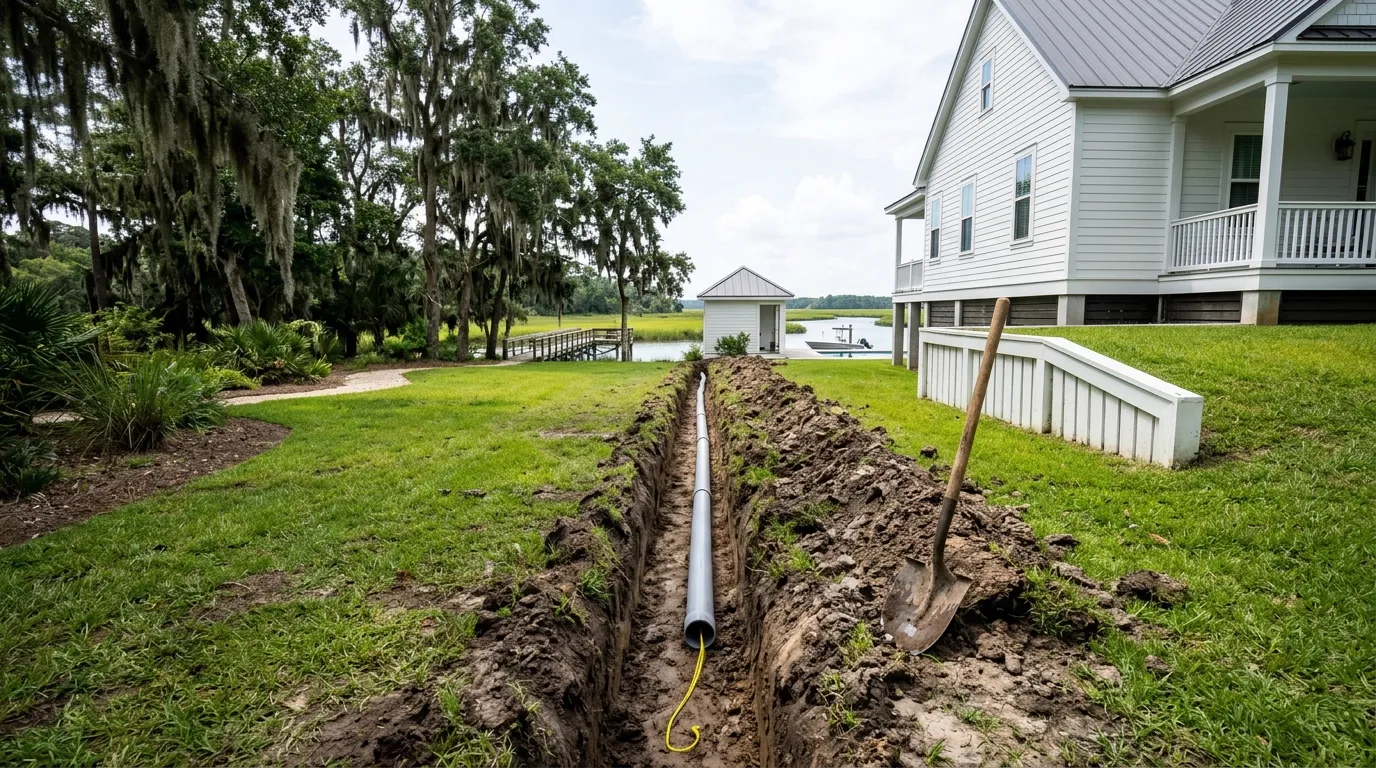
Conduit with pull strings runs to your dock, pool house or detached garage while ground is open.
Rack setups for your gateway, switches and camera recorder
Switches power access points, cameras and door readers over their data cable. Cable in the rack is dressed into tied bundles, and blank panels close gaps in the front of the rack.
Gateway, switch, Wi-Fi, camera recording and touchscreen sit in one wall-mounted unit.
Gateway, quiet 24-port switch and patch panel fit in a wall cabinet while a battery sits on the floor beside it.
Separate gateway and camera recorder join a switch with a power budget for a floor of cameras.
Choice of setup happens when your house is walked.
Labels at your plate and panel
Every wire receives a label at the patch panel and at the wall plate. Handover includes a written record of every cable path and test results.
Room labels and switch ports are an example.

Steps to finish your house
Cabling books into the rough-in window your builder schedule sets or routes through walls already opened. Handover leaves you with test results and your own logins.
Plan review
Rack location, camera positions, gate conduit and exterior pathways get placed before framing begins.
- Hardware positions mapped
- Gate conduit planned
- Current drawings used
Rough-in
Cables run after mechanical and plumbing rough-in, before insulation covers the walls.
- Builder schedule followed
- Cables pulled early
- Runs labeled clearly
Insulation check
Labels and capped conduit ends receive a check before the spray foam crew arrives.
- Foam preparation check
- Conduit ends capped
- Wire labels secured
Trim-out
Cables terminate, flush wall plates mount, the rack is built and every run is tested after paint dries.
- Plates flush mounted
- Paintable wall plates
- Rack gets built
Handover
Coverage tests happen on a phone in each room and outdoor area.
- Written wire record
- Test results delivered
- App logins provided
Walk of the house
Brick, plaster, foil-backed insulation and metal roofs dictate where cable paths make sense.
- Wall materials checked
- Path options found
- Hardware needs discussed
Routes
Cables route through your attic, your crawlspace and walls already opened for other work.
- Attic paths used
- Crawlspace routes found
- Open walls utilized
Pull and terminate
Wires pull to rooms and wall plates fit flush against your trim.
- Flush wall plates
- Wires pulled to rooms
- Rack bundles dressed
Test and handover
Every run passes a test and a written record shows where each cable goes.
- Coverage tests done
- Written cable record
- Owner app logins
Frequent questions
- Where does the rack go in a raised house?
On a raised house built over parking, your network hardware sits on a living floor above flood level. Power and ventilation are sized with your electrician.
- Should I choose a wall unit or a rack?
One wall unit holds your gateway, switch, Wi-Fi and camera recording. Larger houses with many cameras use an open rack with separate gateway, switches and recorder.
- Can a finished house receive new wiring?
Cables route through your attic, your crawlspace and walls opened for other work. Wi-Fi cameras and access points suit historic houses where plaster stays closed.
- Which rooms and positions get a cable?
Cat6 cable runs to every room, TV, ceiling access point, camera, door and exterior point. Blank positions receive a wire so hardware gets added later.
- What does the battery keep running?
Rack batteries on your cupboard floor carry your network, cameras and door hardware through a short power cut.
- What do I receive at handover?
Handover includes a written record of where every cable goes with test results, your own logins, app access and a tidy labeled rack.
Start your wiring project
Call our office or book a walkthrough to plan your hardware and cable routes.