Sensors identify likely vapor events
Devices record the exact time vaping likely occurred without identifying a specific person. Staff follow up using adjacent hallway cameras, keeping the locker room or restroom fully private.
Restroom monitoring sensors
Staff receive an immediate alert when someone vapes in a restroom or locker room, keeping spaces private because sensors read the air.
Each venue directs alerts to available staff members so they can review hallway cameras or play an announcement nearby.
Administrators protect student restrooms and locker rooms without compromising privacy, relying on targeted alerts to act quickly when an incident occurs.
Managers monitor locker rooms and private changing areas using air sensors, preserving member privacy while enforcing clean air policies.
Managers monitor lobby and public restrooms, keeping shared facilities clean and free of vapor emissions.
Owners keep dining room restrooms clean and comfortable for guests by receiving direct alerts when someone vapes inside.
Facility managers track air quality in enclosed meeting rooms and monitor restrooms for vapor, ensuring healthy workspaces for employees.
Property managers ensure shared restrooms and clubhouses remain clean and free of vapor by monitoring air quality inside common areas.
Enclosed spaces require careful positioning because walls and partitions block airflow. Mounting sensors close to likely sources ensures vapor reaches the device quickly.
Room shown is an example layout
Sensors stream environmental data directly to your console, allowing staff to monitor baseline conditions and react instantly to sudden changes.
Live indexes from zero to one hundred identify aerosol patterns characteristic of vapor and e-cigarette emissions. Staff use alerts to review adjacent camera footage.
Carbon dioxide levels indicate when meeting rooms or classrooms lack fresh air. Facility managers use elevated trends over thirty minutes to increase ventilation.
Fine particles at two point five microns point to smoke or cooking, while total volatile organic compounds rise after cleaning or renovations. Ventilation usually resolves spikes.
Relative humidity between thirty and sixty percent improves comfort and limits mold. Staff track temperature and humidity to ensure proper environments in occupied rooms.
Sensors send alerts around one thousand to twelve hundred parts per million, telling facility managers to increase fresh air or reduce occupancy if trends stay elevated for over thirty minutes.
Alarm Manager directs notifications to designated people, allowing rapid responses to incidents. Automations trigger actions across the system when environmental thresholds are crossed.
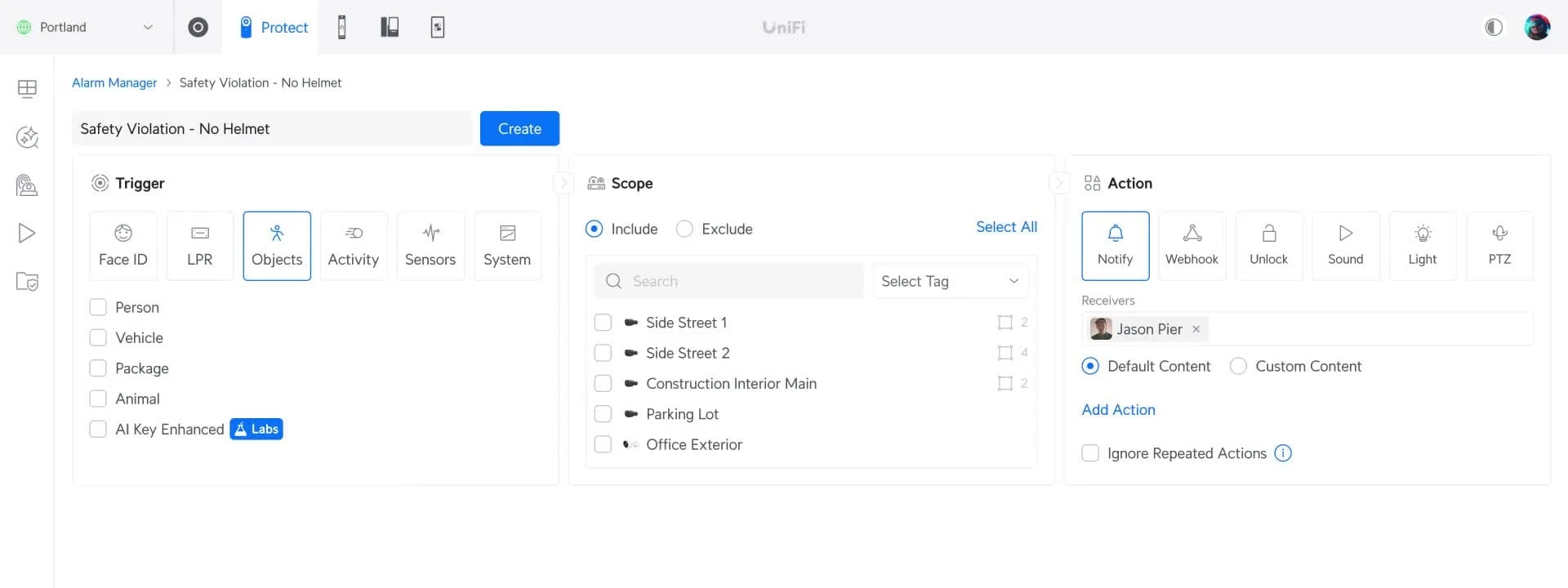
Vape sensitivity uses a calibration slider from zero to one hundred. Adjusting the slider provides instant feedback to fit exact environments and minimize false alerts.
Devices record the exact time vaping likely occurred without identifying a specific person. Staff follow up using adjacent hallway cameras, keeping the locker room or restroom fully private.
Aerosol sprays, humidifiers, steam, fog and frequent dust can occasionally raise readings. Installers keep sensors away from air fresheners, fragrance diffusers and cleaning products to prevent false alerts.
One sensor covers one enclosed room because walls and partitions block airflow. Large or segmented rooms benefit from multiple devices to ensure complete coverage.
Devices operate strictly in indoor rooms and monitor environmental conditions. They are not smoke or carbon monoxide alarms and do not replace required life-safety equipment.
Measuring about three point seven inches across, sensors mount cleanly on ceilings and run on single network cables for power and data.
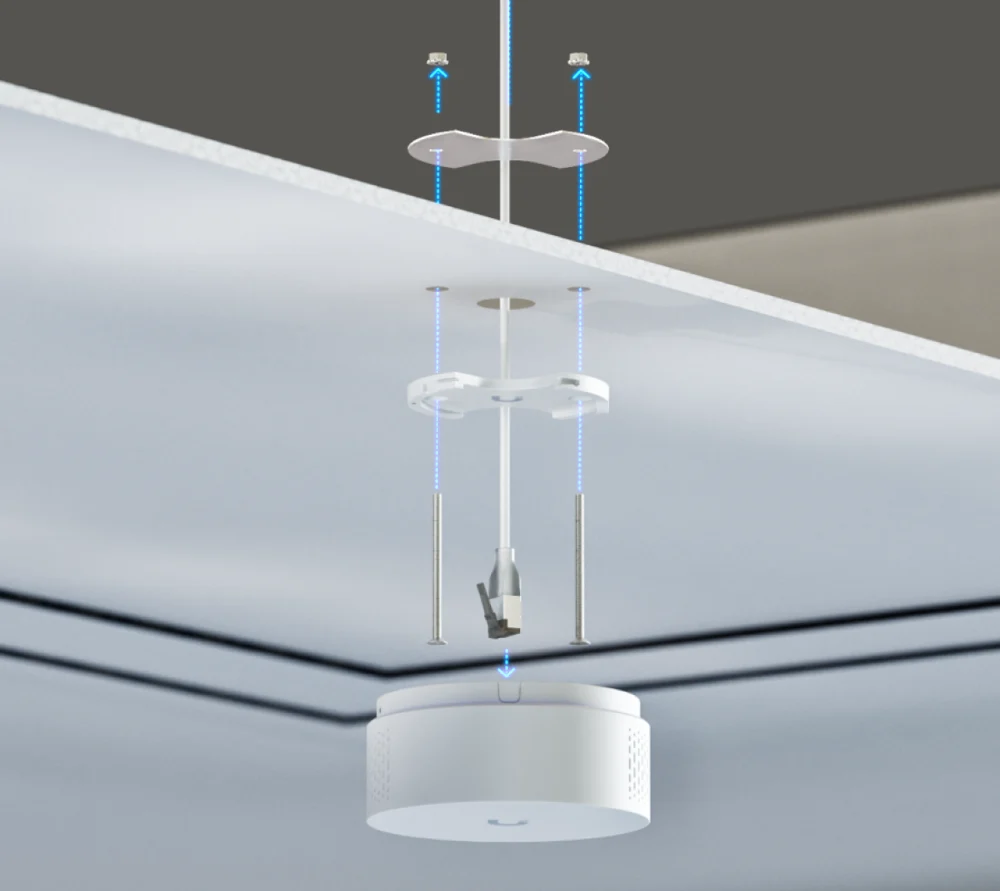
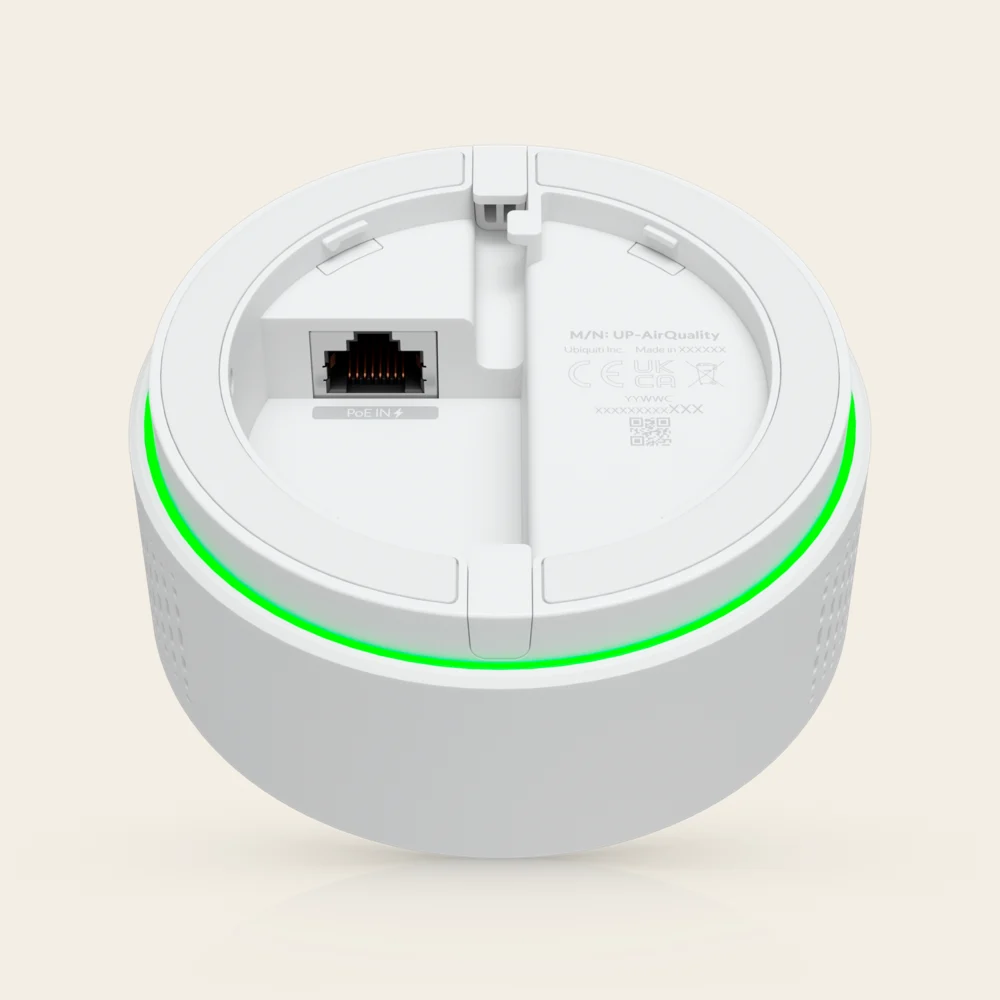

Technicians map out target restrooms and meeting spaces to plan cable routes.
Installers run secure Ethernet lines to each planned location, ensuring reliable data and power.
Technicians secure the hardware and adopt each device into the local console.
Staff run controlled tests near likely vapor sources to verify alerts before final handover.
Sensors report that an event likely occurred and when, without identifying specific people. Administrators use adjacent hallway cameras to follow up on the alerts.
Humidifiers, steam and aerosol sprays occasionally raise readings. Adjusting the sensitivity slider helps filter weaker signatures in rooms with routine cleaning products or occasional steam.
One sensor covers one enclosed space, since walls and stalls block airflow. Large or segmented restrooms benefit from multiple devices to catch vapor before it dissipates.
Devices contain no microphones and no cameras. Privacy remains fully protected because sensors strictly read air composition to detect vapor emissions and measure air quality.
Carbon dioxide measurements track ventilation against occupancy. Facility managers configure alerts around one thousand to twelve hundred parts per million to trigger fresh air intake.
Call CloudCentric to plan sensor coverage for your restrooms, locker rooms and meeting spaces.